

March 2, 2026
Steel Frame or Wood Frame: Which one is the best?
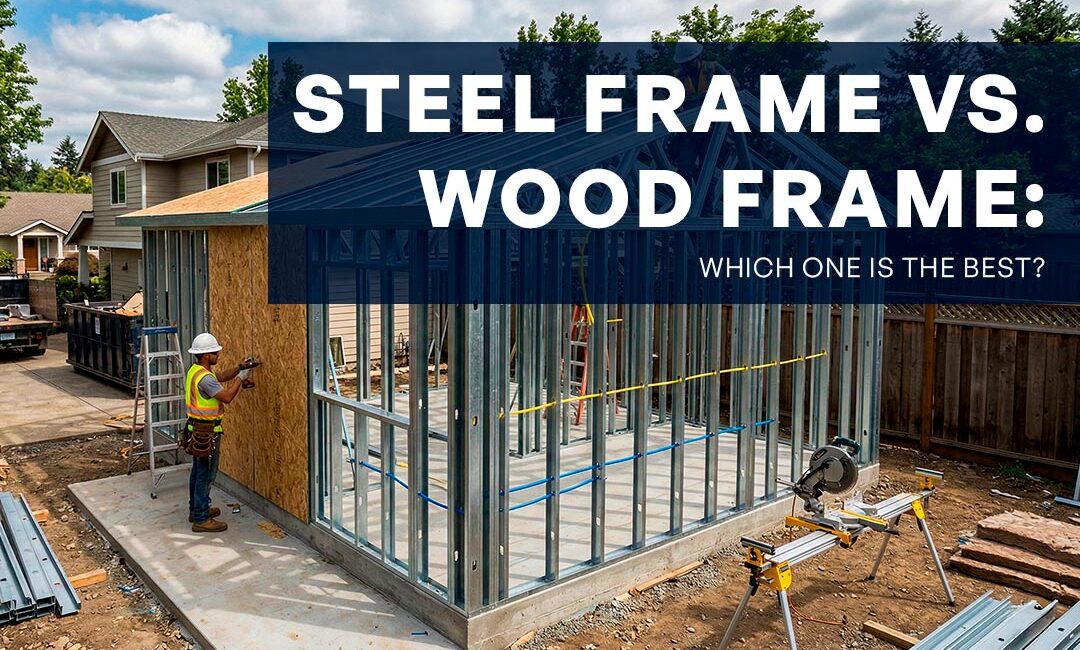
Cold-Formed Steel Framing vs. Wood Framing in Modular Construction: Why Steel Is the Smarter Choice
If you’re planning a modular house, ADU, or full residential project, understanding the structural system behind your build is essential. The differences between wood framing and cold-formed steel framing can directly impact durability, performance, maintenance, and long-term value.
What Is Each System?
- Wood Framing:
Uses engineered lumber studs (typically pine, spruce, or I-joists) with OSB sheathing. It’s lightweight, flexible, and has been the go-to system for U.S. residential construction for generations.
- Cold-Formed Steel Framing:
Built from precision roll-formed, galvanized light-gauge steel profiles. Components are CNC-cut to millimeter accuracy and assembled into strong, rigid panels—ready for fast modular installation.
Both systems perform well in modular and prefab construction, but steel stands out for its dimensional stability and engineered consistency.
Materials: Natural vs. Precision-Engineered
Wood is renewable and naturally insulating, but as an organic material it reacts to moisture, temperature swings, and biological threats. In many U.S. regions, termites, high humidity, and seasonal climate changes can create long-term structural challenges.
Cold-formed steel is inorganic, non-combustible, and 100% recyclable. Its factory-applied galvanization provides decades of corrosion protection—even in coastal, humid, or hurricane-prone environments.
Durability and Longevity: Steel Wins Clearly
Quality steel-framed structures routinely last 100+ years with virtually no structural maintenance. Steel does not rot, warp, shrink, crack, or settle. Its superior strength-to-weight ratio allows for larger open spans, taller ceilings, and more flexible layouts while keeping the structure lightweight.
Wood framing, even when properly treated, requires ongoing protection against pests and moisture—especially in variable U.S. climates.
Superior Resistance to Fire, Pests, Moisture & Extreme Weather
- Fire:
Steel is non-combustible—it does not fuel flames and maintains structural integrity longer when protected with standard gypsum assemblies. This is particularly important in wildfire-prone areas.
- Pests & Moisture:
Steel is completely immune to termites (which cause billions in damage annually across the U.S.), mold, rot, and carpenter ants.
- Storms & Earthquakes:
Its controlled flexibility and high strength help buildings withstand high winds, seismic activity, and heavy snow loads more effectively than traditional wood framing.
Precision and Quality in Modular Construction
Steel’s greatest advantage in modular building is factory precision. CNC-cut components produce perfectly straight walls, square corners, and exact door and window openings—resulting in tighter building envelopes, fewer adjustments on-site, and a noticeably higher-quality finished home.
Wood framing can be accurate, but natural variations in lumber frequently require additional corrections during installation.
Thermal and Acoustic Performance: The Myth Busted
A common misconception is that steel “feels cold” or conducts too much heat. In reality, modern steel-framed homes—when properly designed with high-performance insulation such as mineral wool, fiberglass, or closed-cell foam, combined with thermal breaks—meet or exceed strict IECC energy codes.
The rigidity of steel framing also allows superior air sealing, improving thermal efficiency and delivering excellent sound control in both suburban and urban environments.
Speed, Sustainability, and Long-Term Value
Modular steel construction can reduce overall project timelines by 50–70% compared to traditional site-built homes. The lighter weight often allows for smaller, more cost-effective foundations and up to 75% less on-site waste.
Steel is one of the most recycled materials in the world, making it a highly sustainable construction choice.
While upfront material costs for steel may be comparable to or slightly higher than wood, the total cost of ownership is typically lower due to reduced maintenance, potential insurance savings, and exceptional longevity.
Why Choose Cold-Formed Steel Framing for Your Modular Project?
- Exceptional Durability:
100+ year lifespan with minimal structural maintenance.
- Total Resistance:
Immune to fire, termites, mold, and extreme weather conditions.
- Factory Precision:
Superior finish quality and consistent structural performance.
- Energy Efficiency:
High-performance insulation compatibility and improved air sealing.
- Faster Build Process:
Reduced timelines and cleaner job sites.
- Long-Term Value:
Lower maintenance, potential insurance benefits, and lasting peace of mind.
Sources & References
- BuildSteel – Cold-Formed Steel 101:
Technical overview of cold-formed steel properties, durability, and structural advantages.
buildsteel.org/why-steel/cold-formed-steel-101
- BuildSteel – 10 Reasons to Frame Your Next Project with Steel:
Industry-backed explanation of fire resistance, sustainability, and long-term performance.
buildsteel.org/why-steel/cold-formed-steel-101/10-reasons-to-frame-your-next-project-with-steel
- Framecad – Steel vs. Wood Framing Comparison:
Comparative analysis of structural stability, pest resistance, and manufacturing precision.
framecad.com/blog/steel-vs-wood-framing
Contact Us
Let's Get in
Touch
We offer transparent pricing based on model, finish level and site conditions. Request a quote and we’ll provide a detailed estimate tailored to your property.
Yes, and we take care of that for you. Our team handles all local zoning checks, permitting and approvals so you can build without the paperwork hassle.
From initial approval to on-site installation, most projects are completed within 8–12 weeks, depending on permitting and site prep.